
Recovery Stability Sessions
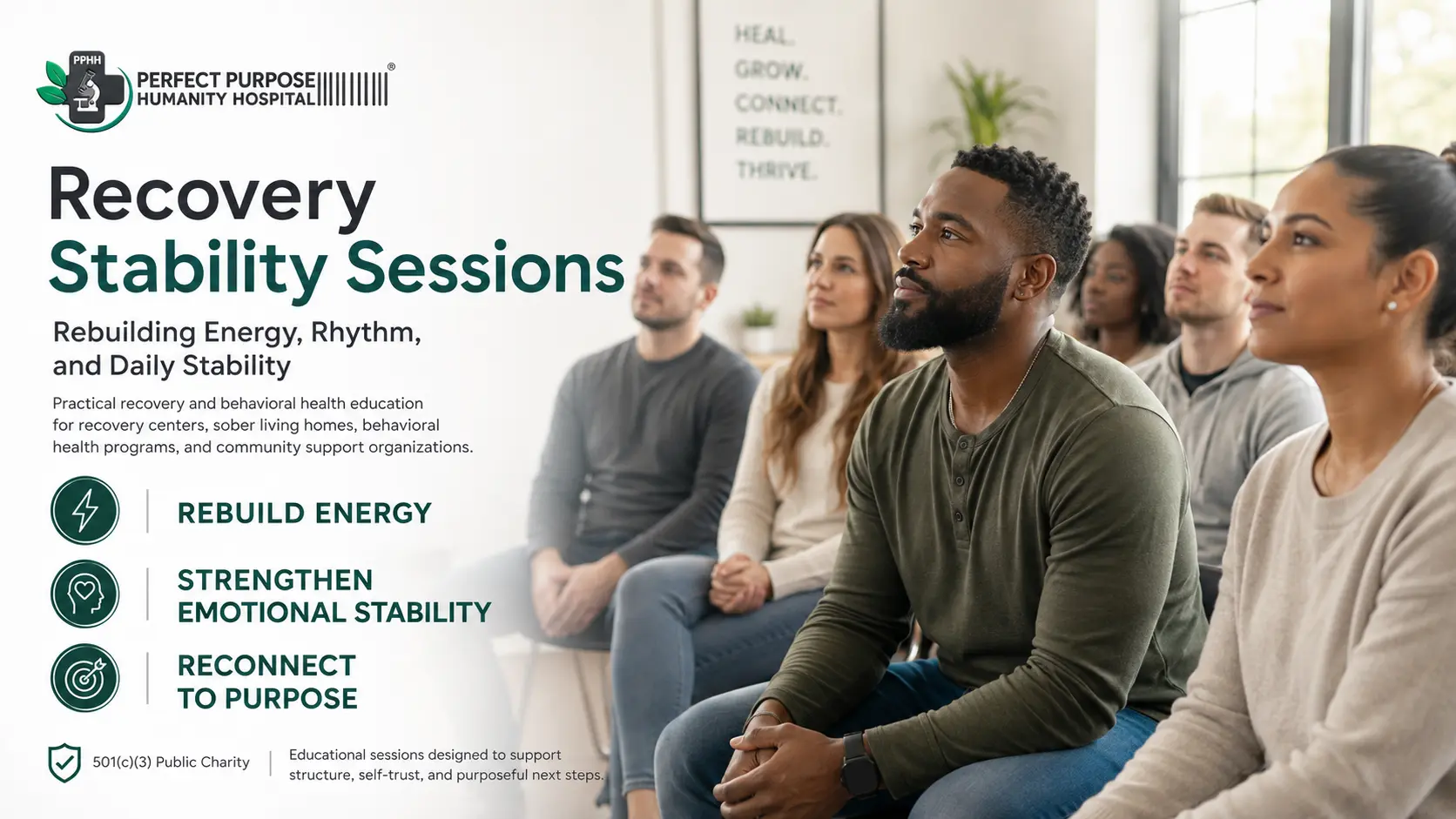
Recovery Requires More Than Stopping What Harms You.
It also requires rebuilding what steadies you.
PPHH’s Recovery Stability Sessions give recovery centers, sober living homes, behavioral health programs, reentry organizations, community nonprofits, and support-based environments a practical way to help participants understand daily patterns, respond to stress with greater awareness, and build routines they can use beyond the session.
Designed to complement existing clinical care, counseling, peer support, recovery coaching, and medical services.
A Session Built for Real-Life Recovery Environments

Many people in recovery are rebuilding more than behavior. They are rebuilding trust, daily rhythm, decision-making, and a sense of what comes next.
Recovery Stability Sessions meet people where they are, with practical education designed to be understood, remembered, and used.
Participants explore:
- How daily rhythm can influence energy and emotional steadiness
- How stress can escalate before a decision
- How body awareness can create a pause before reaction
- How small routines can rebuild self-trust
- How purpose can become a practical stabilizer
The goal is simple: give people tools they can carry into real life.
What the Session Helps Participants Build
Daily Stability
Participants explore how sleep-wake rhythm, hydration, regular meals, rest, movement, and consistent routines can support a steadier day.
The focus is stability before intensity.
Emotional Regulation
Participants learn to recognize stress signals, emotional flooding, and automatic stress responses before they become action.
Grounding, breath awareness, body awareness, and support-seeking create practical opportunities to pause and respond more intentionally.
Self-Trust and Purpose
Recovery is not only about getting through the day.
It is about rebuilding the person beyond the behavior.
Participants reconnect with identity, dignity, self-trust, and one meaningful next step they can carry into the next 24 hours.
Designed for Recovery Environments That Want More for Their People
Recovery Stability Sessions may be appropriate for:
- Recovery centers
- Sober living homes
- Substance-use treatment programs
- Behavioral health organizations
- Community mental health and support programs
- Reentry and transition programs
- Recovery courts
- Women’s recovery homes
- Family restoration programs
- Community nonprofits
- Peer-support environments
- Life-skills education programs
Each session is shaped around the audience, setting, organizational boundaries, and program needs.
Core Session Topics

Daily Rhythm and Structure
Sleep-wake timing, morning light, meal rhythm, movement, evening wind-down, and routine as a stabilizing foundation.
Daily Energy and Recovery
Hydration awareness, regular eating patterns, daily energy fluctuations, cravings, rest, and the relationship between routine and how people feel throughout the day.
Emotional Regulation
Stress awareness, emotional flooding, fight-flight-freeze responses, trigger recognition, and the power of creating a pause before reaction.
Body Awareness and Grounding
Gentle movement, posture awareness, sensory grounding, breath awareness, and accessible body-based practices that do not require intense exercise.
Self-Trust and Purpose
Small commitments kept, identity rebuilding, personal stability planning, dignity, and practical next steps that create forward movement.
Practical Tools Participants Can Use
This session is not built around theory alone.
Participants leave with simple tools designed to be short, practical, and repeatable.
The Breath-and-Gap Stability Practice
A brief breath-awareness practice that helps participants notice the space between impulse and response.
The 90-Second Stability Reset
A simple grounding practice using posture, body awareness, and one stabilizing next action.
The Daily Stability Check-In
A quick pattern-tracking tool for sleep, wake time, hydration, mood, energy, stress, cravings, and one stabilizing action completed.
The Next 24-Hour Commitment Map
A brief reflection tool that helps participants identify one realistic action they can complete before the next day ends.
The goal is not to overwhelm participants. The goal is to give them something real.
Session Format

60-Minute Recovery Stability Session
Focused education, practical tools, and guided reflection.
75 to 90-Minute Interactive Workshop
A deeper experience with participant reflection, group discussion, and practical take-home tools.
Virtual Session
Designed for organizations serving multiple locations, remote participants, or distributed teams.
Local Onsite Session
Designed for organizations that value in-person engagement, connection, and direct interaction with participants.
Final format, customization, pricing, and availability are discussed during the discovery conversation.
Why PPHH Created Recovery Stability Sessions
Perfect Purpose Humanity Hospital is a nonprofit healthcare organization developing a future model where clinical medicine, integrative preventive care, and scientific research come together around the person.
Recovery Stability Sessions are one way PPHH is serving communities now while the future flagship hospital is being developed.
Before the future hospital is built, the work begins with people.
People rebuilding their lives.
People restoring daily structure.
People learning to trust themselves again.
This is one way PPHH is putting its mission into action now.
Bring Recovery Stability Sessions to Your Organization
Every organization serves a different population.
A short discovery conversation helps us understand your audience, setting, preferred format, and goals so we can determine whether a Recovery Stability Session is the right fit.
We can discuss:
- Audience and group size
- Virtual or onsite delivery
- 60-minute session or 75 to 90-minute workshop
- Customization needs
- Pricing
- Availability
- Organizational boundaries and participant considerations